Toronto, Los Angeles…..and now CHICAGO. LOGAN Cinemas in midtown Chicago.
Author: chicagofilmfestival
Submit your Short Film and get it showcased at the FEEDBACK Film Festival in Chicago. 1 event in 2019. 12 events in 2020. Festival takes place at LOGAN Theatre in downtown Chicago on the 3rd Friday of every single month.
UNFINISHED, 3min., India, Crime Directed by Sudeep Mehta A crime has been committed. A crime is being committed. A crime might be committed. All seen through found evidence. Or, maybe not, for lost evidence! It’s all ‘Unfinished’
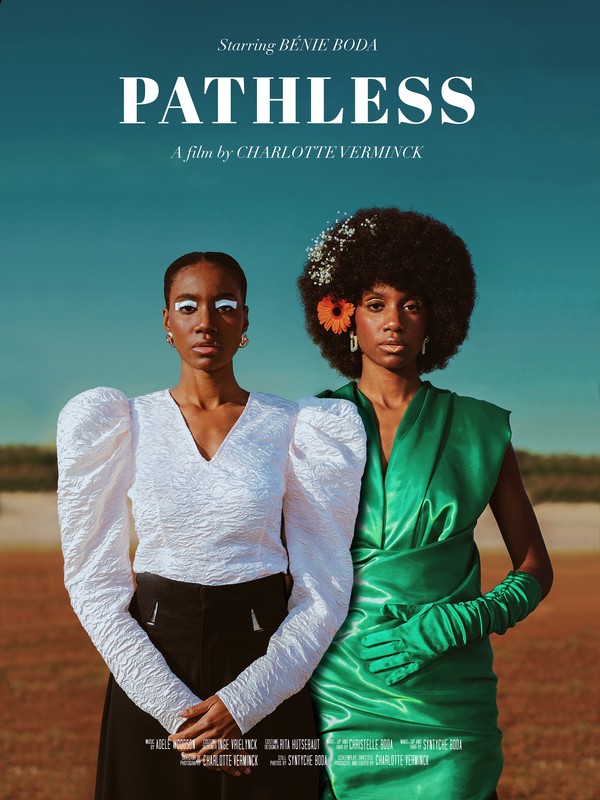
PATHLESS, 5min., Belgium, Fashion Directed by Charlotte Verminck
A poetic translation of the universal feeling at one’s unknown next step in life. It connects to the overwhelming periods of doubtful thoughts yet resilient ambition one may encounter. A visual and aural combination of fear yet fearlessness. Though the soliloquy echoes one’s inner difficulty, the road of life gives aspiration for more, and that road is pathless.
Charlotte Verminck is a filmmaker born and raised in Belgium. Ever since she was a little girl, she holds an intense excitement for visual and written storytelling. Her Shih Tzu dog, whom she considers her muse, got the starring role in the first few video trailers she has ever shot and edited.
Charlotte owns a Bachelor’s degree in International Communication and Media. While she completed her studies, Charlotte worked as a video artist for Belgian musician and artist Ozark Henry. She discovered her deep passion for film during her stay in Los Angeles interning at Little Minx, a production company located in Hollywood.
After she graduated, Charlotte immediately started to deepen herself in the world of cinema making her debut with “Pathless” taking on the role of writer, director, cinematographer, producer, and editor. She completed this short film without studying at a film school but learned from a cinematography course, online masterclasses, and studying her heroes. She believes that anyone can do anything if one just follows their curiosity while continuing the act of never giving up.
Director Statement
Due to the script being so experimental, Charlotte in all respects wanted the film to have the same unique DNA applying unexpected transitions; using various camera gear; adding an original versatile score; and letting the same person play the protagonist and antagonist. This experimental way of storytelling linked her passion for poetry and film.
The message in the protagonist’s soliloquy wants to make the viewer aware that the breaks in life aren’t bad things. These moments enter your existence to teach you something. It makes time to analyze where you wish to head next in this world. It’s a blessing to be “pathless” because it indicates you can go wherever you want to move planting seeds where YOU genuinely desire. In short, this film is a love letter to life.
AUTISM ACROSS THE GLOBE, 100min., Lebanon, Documentary Directed by Rima Joseph Irani
An inspiring and insightful journey to over 20 countries, opening your eyes and heart to Autistic individuals. Learn about their challenges, environment and social life. Discover their strengths, talents and unique abilities. Autistic people share their experiences, feelings and desires. Families discuss therapies and support that made a difference in their child’s life. Teachers describe strategies that help their students learn and perform at their best. Employers state how they modify the workplace to help them perform at their best potential. Specialists highlight their studies. “Autism across the globe” takes viewers on the most heartfelt, emotional and educational journey. It is meant to be the catalyst for a worldwide change, aiming to improve autism awareness and acceptance.
Showcase of the best SHORT FILMS in the world today.
AUDIENCE AWARD WINNERS:
Best Film: COMPEL
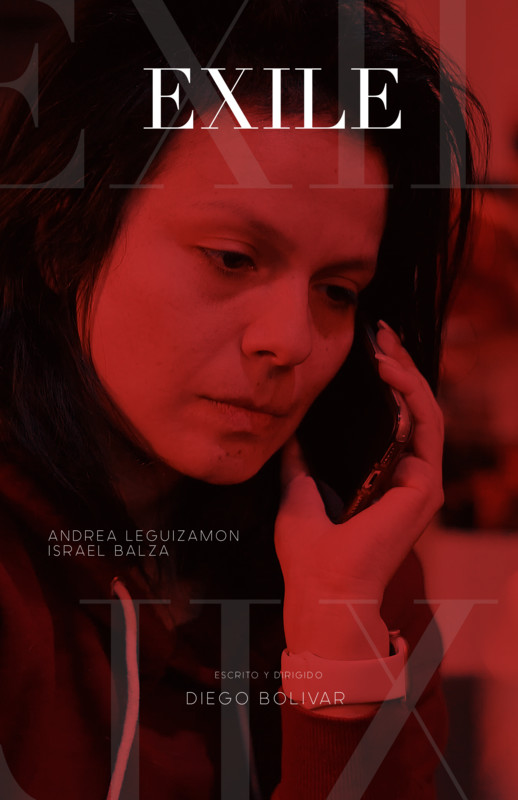
Best Performances: EXILE
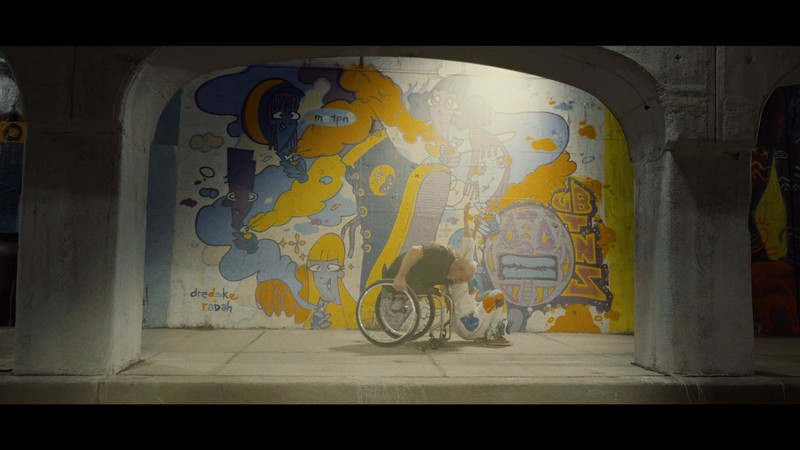
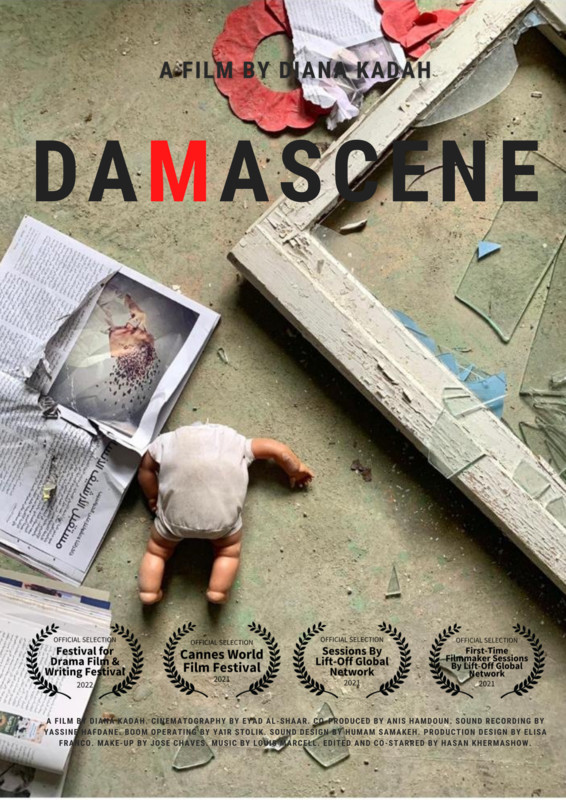
Best Cinematography: DAMASCENE
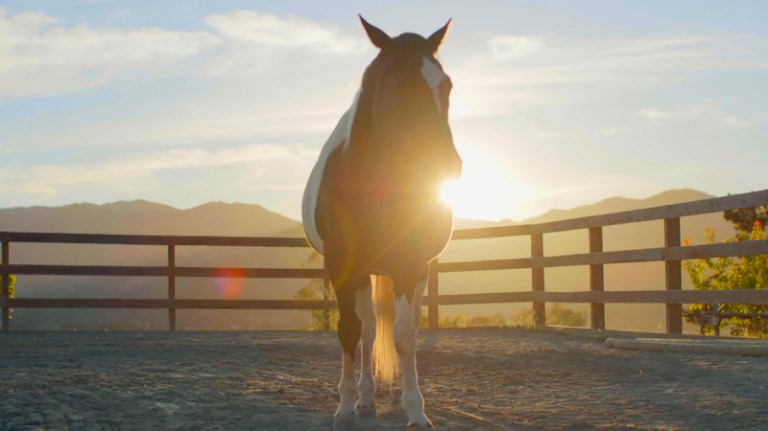
Best Sound & Music: VELCRO: A STUDY IN POLYVAGAL EQUINE
Best Direction: HOME VIDEO
Twist Film of the Year: GREENHORN
An honest, at times absurd, conversation about being a Black woman in America, “The Mirror” is a short animated film that weaves the personal stories, experiences and reflections of nine Black women talking about their interactions with white people. On the subject of swimming, “Black people have no buoyancy,” says one white woman with assurance. “Your people have an inability to master the proper use of the English language,” says another. “The Mirror” is a revealing and unapologetic take on what it is like to be a Black woman in America.
DIANA KADAH is a Syrian actress and filmmaker from Damascus, who now lives in Berlin. Diana won the Citation Award prize in the Aleppo theatre festival- 2006 for her role of “Reya” in the “The Great Romulus” when she was just seventeen. Later, in Germany, she was awarded the FARBENBEKENNEN-Award 2018.
Since childhood, Diana had graphic ideas for her surroundings. These ideas were always vivid inspired a sense of urgency to realize or transmit them. Many things inspired her, especially the stories, that found their way from the prisons of the Syrian regime to the public. The fact that the Syrian Government was built upon corruption, tyranny, and the people had to pay for their political opinions with their freedom, and, sometimes, even with their lives, led her to find a medium in which she could depict this influence and express herself artistically.
Over time it became clear to Diana that she wanted to be an author and director and study cinema, but because there was no film academy in Syria, due to the government control on the media industry, the Higher Institute of Dramatic Art (Damascus) was her only option. Between 2009 and 2011 Diana studied towards a bachelor’s degree in theatre acting. Unfortunately, she never got to finish her bachelor’s program, because of war, she had to flee Syria to temporarily stay in Lebanon. There, she studied film and television at the Institute of Fine Arts, but again she had to end her studies, because of the unstable situation in Lebanon and the xenophobia she was exposed to, as a Syrian. In 2015, she managed to immigrate to Germany, to keep pursuing her movie-making aspirations. Now she graduating from Catalyst
Diana always thought of art as an alternative resistance and uses the camera as a weapon to exploit inequalities in society. The focus of her work is the topics of Refugees, feminism, multi-cultural societies, families, psychology, sociology, politics, and human- and LGBTQ+ rights. In conclusion, for the past 10 years, she has been working on various productions as a filmmaker, an actress, and a theatre artist- including short and feature films, TV series, theatre plays, music videos, and commercials.
Director Statement
I was inspired to do this movie by listening to a report of a murder that occurred during the civil conflict in Damascus-Syria. This report led me to investigate the suspects and the victim. I found contradicting information on social media: one post advocated the innocence of the suspects, claiming a drug overdose had killed the victim; while posts on the victims’ page denied the allegations. The victim had, however, been kidnapped prior to his death, the reason for the kidnapping is unclear. Was it done for monetary or personal reasons? Sources claim the victim lived in an area that opposed the Al-Assad regime. The “Damascene” film highlights the effects of war on the psyche of the younger generation, and the impact of the normalization of violence, inflicted by those with political interests.
What are the reasons behind the general mistrust within Syrian society after 2011? Citizens are accusing each other of various crimes, whether innocent or not. Subsequent arrests follow… Creating a guilty-until-proven-innocent system.
The film location is the Funkhaus building, in Berlin, as it is quite similar to a war-torn building in Damascus.
As the writer, producer, and director, the coordination of untrained actors’, and designers’ work is vital to a fresh cinematic interpretation. However, all of the choices I had made, throughout the production process, were carried out by teamwork.
Working with a varied international crew was challenging, because of the different cultures, languages, and backgrounds. Regardless, everyone was really invested in a film about the Syrian war. As I am a film production student, at Catalyst Institute For Technology And Art, I was able to acquire the equipment for two days’ shooting.
In short, the purpose of this film is to show the audience how the political situation has been a source of anxiety, dread, and hopelessness. The reason that drove generations to take drugs, as a method of escapism from the brutal reality of dealing with violence, and the destruction of friendships.
During an airstrike, in a Civil war-ravaged, Syria, three teenage boys desperately seek refuge in an abandoned, run-down building. Samir receives a call from his frantic mother, urging him to be safe and return home, once the airstrike is over.
Although he is desperate to return to his mother, he is persuaded by Shihab to partake in drugs.
The mood intensifies, as the conversation turns to Alia and Alaa, the “heroic” friends of Shihab, who were apprehended by the regime’s Secret Service, for aiding wounded rebels.
An interrogation ensues, with Shihab questioning Samir’s involvement in the apprehension of Alia and Alaa.
Samir’s mood turns even more somber and he requests more pills. Shihab blatantly accuses Samir of being the traitor, questioning his loyalty to his loved ones. As troops enter the building, the boys are once again forced to flee, with the narcotics taking an overwhelming effect on Samir.
Outside, they run into Husam, a cousin of Alia and Alaa.
When Alia and Alaa’s apprehension is once again brought up, and Samir is revealed as the traitor, Husam physically assaults Samir.
Through ragged breath, Samir relays the desperate events that led to his betrayal. Samir loses consciousness and becomes unresponsive, having overdosed on the drugs.
As the boys desperately try to revive Samir, it is brought to light that the narcotics were part of a ploy to trick Samir into confessing.
As army troops emerge from the building, the trio flees, abandoning Samir. This act forces a transition of childhood innocence into the brutality of adulthood.
While brand new to filmmaking, Ted Thomas is no stranger to expressing his creative vision. With over twenty-five years experience as a professional photographer, he has seen and done it all. From high fashion, tech, travel, products and food, Ted has spent his life exploring the world and those within it.
Director Statement
I had the opportunity to take a session with Velcro, and without hyperbole, it was life changing, and forced me to look within myself in ways I never considered. I wanted to explore the connection between human and horse, and the people I met along the way were truly amazing. I hope this brief glimpse into Velcro’s world will give you the curiosity to explore this connection further.
A Hispanic couple fights over not so simple matters of their past. Confined to a small apartment in Chicago, lack of communication with other people, and the despair during the pandemic, take their disagreement to the next level